


Hepatoprotective and antidiabetic effects of Cichorium intybus seed extract in alloxan-induced diabetic mice: a histopathological evaluation
Published: 31 December 2024
Volume 3
Abstract
Diabetes mellitus (DM) is a chronic metabolic disorder associated with hepatic dysfunction caused by persistent oxidative stress and hyperglycemia. The establishment of safe plant-based therapies to manage diabetes-related hepatic injury has been an important research area. This experimental study determined the hepatoprotective effect of Cichorium intybus (Kasni) seed extract on alloxan-induced diabetes in mice via histopathological evaluation. Thirty male albino mice were selected and randomly divided into three groups (n = 10 each): the nondiabetic control group, the diabetic untreated group, and the diabetic Kasni-treated group. Type 2 diabetes was induced by the intraperitoneal administration of alloxan monohydrate (150 mg/kg). Aqueous extracts of Kasni seeds (400 mg/kg) were orally administered once a day for 28 days to the mice in the treatment group, and gross liver morphology and histological features were studied for changes via hematoxylin and eosin (H&E) staining. The results of the present study revealed that untreated diabetic mice presented elevated blood glucose levels, enlarged pale livers, and histological features indicating hepatic injury, including hepatocellular vacuolation, sinusoidal congestion, and early pericentral fibrosis. Diabetic mice treated with Kasni presented near-normal hepatic histological features; furthermore, the structure of the central vein was restored, orderly hepatocyte plates formed, and no inflammation, steatosis or fibrosis was observed. The gross morphological features revealed that the liver color and texture were similar to those of the control group. The study concluded that Cichorium intybus has a hepatoprotective effect against diabetes-related liver damage because of the antioxidant and anti-inflammatory properties of the active ingredients in the plant.
Keywords
Cichorium intybus, Kasni seeds, Hepatoprotective effects, Histological analysis, Diabetes-induced mice, Alloxan, Liver health
1. Introduction
Type 2 diabetes mellitus (T2DM) is an insulin-resistant metabolic disorder that is characterized by metabolic dysregulation, progressive β-cell dysfunction and insulin resistance; therefore, the role of the liver is important in both the pathogenesis and complications of diabetes [1]. The prevalence of diabetes across the globe is increasing, and it is estimated that 589 million people from 20-79 years of age are suffering from diabetes; furthermore, the global prevalence is estimated to exceed 700 million individuals by the year 2045 [2,3]. Despite advancements in pharmaceutical drug development and manufacturing technologies, conventional pharmacological agents, including metformin, sulfonylureas, and thiazolidinediones, have been proven to be ineffective in organ protection, mitigating adverse effects, and increasing patient compliance [4,5].
Chronic hyperglycemia and insulin resistance generate oxidative stress, lipotoxicity, and inflammation in liver cells, which leads to structural and functional liver damage [6,7]. Therefore, natural compounds with multitarget antioxidant, anti-inflammatory, and hepatoprotective activities have attracted scientific interest as potential adjuncts to standard pharmacological therapy [8,9]. Medicinal plants remain a key source of novel bioactive compounds, and numerous phytochemicals have been shown to improve insulin sensitivity and protect hepatic architecture in preclinical models of diabetes [10].
Among these, Cichorium intybus L. (chicory; commonly known as Kasni) is a medicinal herb with a long ethnopharmacological history in Unani and Ayurvedic medicine [11,12]. Its phytochemical profile includes inulin-type fructans, chicoric acid, chlorogenic acid, sesquiterpene lactones, flavonoids, and phenolic acids that collectively contribute to antioxidant, hypoglycemic, and hepatoprotective actions [13,14]. Recent mechanistic evidence indicates that these compounds modulate AMPK and PPARα signaling, suppress NF-κB activation, and inhibit NLRP3 inflammasome assembly, thereby mitigating hepatic oxidative injury and inflammatory cascades in diabetes and nonalcoholic fatty liver disease (NAFLD) [15,16,17].
Over the past five years, experimental and clinical studies have strengthened the scientific basis for the metabolic and hepatic benefits of chicory. Animal studies have shown that C. intybus seed and leaf extracts significantly reduce fasting glucose, serum triglyceride, and liver enzyme levels while restoring antioxidant enzyme activity and normal hepatic histology in alloxan- or streptozotocin-induced diabetic rodents [18,19,20]. Parallel clinical studies reported modest improvements in glycemic control, liver function, and inflammatory markers in patients receiving chicory supplementation [21,22]. In addition, chicory polysaccharides have been shown to reduce hepatic steatosis via AMPK activation and the downregulation of lipogenic genes [23].
Although these results are promising, there are few reports on the hepatoprotective efficacy of C. intybus seed extract in diabetic models with histopathological validation. This study investigated the hepatoprotective and antidiabetic activities of Cichorium intybus seed extract in alloxan-induced diabetic mice, with a focus on the biochemical and histopathological features of hepatic recovery.
2. Methodology
2.1. Study design and ethical approval
This controlled experimental study was designed to assess the hepatoprotective and antidiabetic effects of the seed extract of Kasni in alloxan-induced diabetic mice. The experimental work was conducted at the Department of Zoology, University of Education, Lahore, after approval was obtained from the Institutional Ethical Review Board of the University of Education, UE/IRB/2023/CHEM-011. The study is presented according to the ARRIVE 2.0 guidelines on the reporting of animal experiments to ensure reproducibility and transparency of the research [24].
2.2. Sample size determination
The study included a total of 30 mice, with 10 animals in each of the three groups. A formal a priori sample size calculation was not conducted at the time of study planning. The number of animals selected was based on practical feasibility, adherence to ethical principles for minimizing animal use, and reference to previously published alloxan-induced diabetic mouse models that commonly used approximately 10 animals per group for histopathological and organ-level evaluation [24,25]. In line with the ARRIVE 2.0 guidelines, the study provides transparent reporting on how the sample size was determined. While adequate for preliminary assessment, this sample size may limit the statistical power of the study.
2.3. Experimental animals and housing
Thirty male albino mice (Mus musculus), 5–6 weeks of age and approximately 25 g, were procured from the University of Veterinary and Animal Sciences (UVAS), Lahore. Before experimentation, the mice were allowed to acclimatize for two weeks under standard laboratory conditions of temperature, humidity, and light. The animals were housed in steel cages with softwood bedding maintained at 29 ± 2 °C, 40–60% relative humidity, and a 12-h light/dark cycle, with free access to the standard pellet diet and water ad libitum. A maximum of five mice were placed in each cage, and the bedding was renewed twice a week. Nesting tissue and paper tubes were also used to reduce stress.
2.4. Induction of experimental diabetes
Type 2 diabetes was induced by intraperitoneal injection of freshly prepared alloxan monohydrate (Sigma‒Aldrich, USA) at a dose of 150 mg/kg body weight dissolved in normal saline after an overnight fast. The alloxan solution was prepared just before injection and kept on ice to minimize oxidative degradation. [26,27] To avoid transient hypoglycemia, the animals were given 5% glucose solution for 24 hours post-injection. Blood glucose was measured through the tail vein via a glucometer (Accu-Chek Active, Roche Diagnostics, Germany) on the 1st, 3rd, and 7th days after injection. Animals with blood glucose levels greater than 250 mg/dL on day 7 were considered diabetic and were selected for further experiments [28,29,30].
2.5. Preparation and administration of Cichorium intybus seed extract
Seeds of kasni were obtained from a certified local herbal supplier in Lahore and authenticated by the Department of Botany, University of Education. Seeds were washed with distilled water, shade-dried at room temperature, and pulverized via an electric grinder. Five grams of seed powder was soaked overnight in 100 mL of distilled water and then heated at 70–80 °C for 15 minutes. After cooling, the mixture was filtered through Whatman No. 42 filter paper, and the filtrate was stored at 4 °C until use. A yield of 12% w/w was acquired after extraction, and the extracts were given seven days of post preparation to ensure stability.
2.6. Experimental grouping and treatment
Diabetes was induced in Groups B and C via the intraperitoneal injection of alloxan, whereas Group A served as the nondiabetic control. Blood glucose levels were checked on days 1, 3, and 7 after induction, and mice with glucose > 250 mg/dL on day 7 were considered diabetic. From day 7 onward, Group C received aqueous Kasni seed extract orally at a dose of 400 mg/kg once daily for 28 days through a micropipette, whereas Group B received a corresponding volume of normal saline. Group A received no treatment. Body weight and blood glucose levels were recorded weekly throughout the study period [31,32].
2.7. Sacrifice and tissue collection
At the end of the 28-day treatment period, all the animals were euthanized humanely via CO₂ inhalation followed by cervical dislocation, according to the American Veterinary Medical Association (AVMA) Guidelines for Euthanasia of Animals [33]. The abdominal cavity was opened via a midline incision, and the liver was excised, rinsed gently with normal saline to remove blood, and immediately fixed in 10% neutral buffered formalin (NBF) at a tissue-to-fixative ratio of 1:10 for 48 hours. To minimize batch variability, all samples were fixed and processed within a 48-hour period.
2.8. Histopathological processing and microscopic evaluation
After fixation, the liver tissues were dehydrated through graded ethanol (70%, 80%, 90%, 95%, and 100%), cleared in xylene, and embedded in paraffin wax. The paraffin blocks were sectioned at a thickness of 4 µm via a rotary microtome (Leica RM2125 RTS, Germany). The sections were floated in a 40 °C water bath, mounted on clean slides, and dried overnight. Hematoxylin and eosin (H&E) staining was performed according to standard histological protocols [34].
For each animal, three nonconsecutive sections from three different levels of the liver block (spaced 75–100 µm apart) were prepared and examined to capture representative hepatic morphology. The slides were observed under a light microscope (Olympus BX43, Japan) at magnifications of 10×, 40×, and 100×. Photomicrographs were taken via a digital camera (Olympus DP25) attached to the microscope. All histopathological evaluations were conducted independently by three experienced histopathologists blinded to group allocation, and discrepancies were resolved by joint review. Liver sections were assessed for hepatocellular degeneration, necrosis, sinusoidal dilation, inflammation, and steatosis. Histological alterations were graded semiquantitatively according to a modified scoring system based on Kleiner et al. [35].
2.9. Histopathological analysis
Thirty mice were divided equally into three groups (n = 10 per group). The selected group size was informed by previously published alloxan-induced diabetic mouse models that commonly used approximately 10 animals per group for organ-level and histopathological evaluation [24,25]. The present sample size aligns with these precedents and reflects ethical considerations to avoid unnecessary animal use. All histological data were analyzed via GraphPad Prism version 10.0 (GraphPad Software, USA).
3. Results
3.1. Gross observations
At dissection, the livers of nondiabetic mice appeared normal, smooth, and uniformly reddish-brown with sharp margins and no visible surface nodules or congestion, indicating normal hepatic morphology. Livers from untreated diabetic mice were paler in color and presented a slightly greasy appearance, suggesting fatty changes in the liver; furthermore, mild lobular congestion was observed in some of the diabetic mice. Livers of Kasni-treated diabetic mice showed partial restoration of normal color and consistency of the liver, with no gross nodules and minimal dullness, highlighting improvement in morphological features compared with those of the untreated diabetic group.
3.2. Blood glucose trends
Following alloxan administration, random blood glucose levels increased in untreated diabetic mice and Kasni-treated mice by the third day and stabilized above 250 mg/dL by day seven, confirming successful diabetes induction in these mice. Nondiabetic mice maintained normoglycemia throughout the experiment. During the 28-day treatment phase, the untreated diabetic mouse group maintained continually increased blood glucose values (typically > 300 mg/dL), whereas the Kasni-treated mouse group revealed a progressive decline in blood glucose levels, reaching near-normal levels (~160–180 mg/dL) at the time of sacrifice.
3.3. Nondiabetic control
Liver sections from nondiabetic mice presented normal lobular features; hepatocytes were polygonal in shape with centrally placed nuclei and were arranged in a one-cell-thick line radiating from a clearly defined central vein (Figure 1). The sinusoids were narrow and regularly distributed, and the Kupffer cells were normal in number and morphology. The portal triad, consisting of the portal vein, hepatic artery, and bile duct, appeared intact without inflammation or fibrosis.

Figure 1. Histology of the control group. (a) Portal triad showing the artery (A), bile duct (B), and portal vein (C). (b) Central vein (A) with radially arranged hepatocyte cords (B) and normal sinusoids (C). H&E × 400.
3.4. Diabetes untreated
In the diabetic untreated group, hepatic lobular organization was disrupted (Figure 2). The hepatocytes displayed cytoplasmic vacuolation and fatty degeneration (macrovesicular steatosis), with occasional ballooning and nuclear pyknosis. The central veins were dilated, and mild sinusoidal congestion was observed. Portal tracts exhibited inflammatory infiltration by mononuclear cells, whereas focal pericentral collagen deposition indicated early fibrosis. Approximately 8 of the 10 diabetic mice demonstrated varying degrees of these histologic alterations. No regenerative nodules or bridging fibrosis were identified.
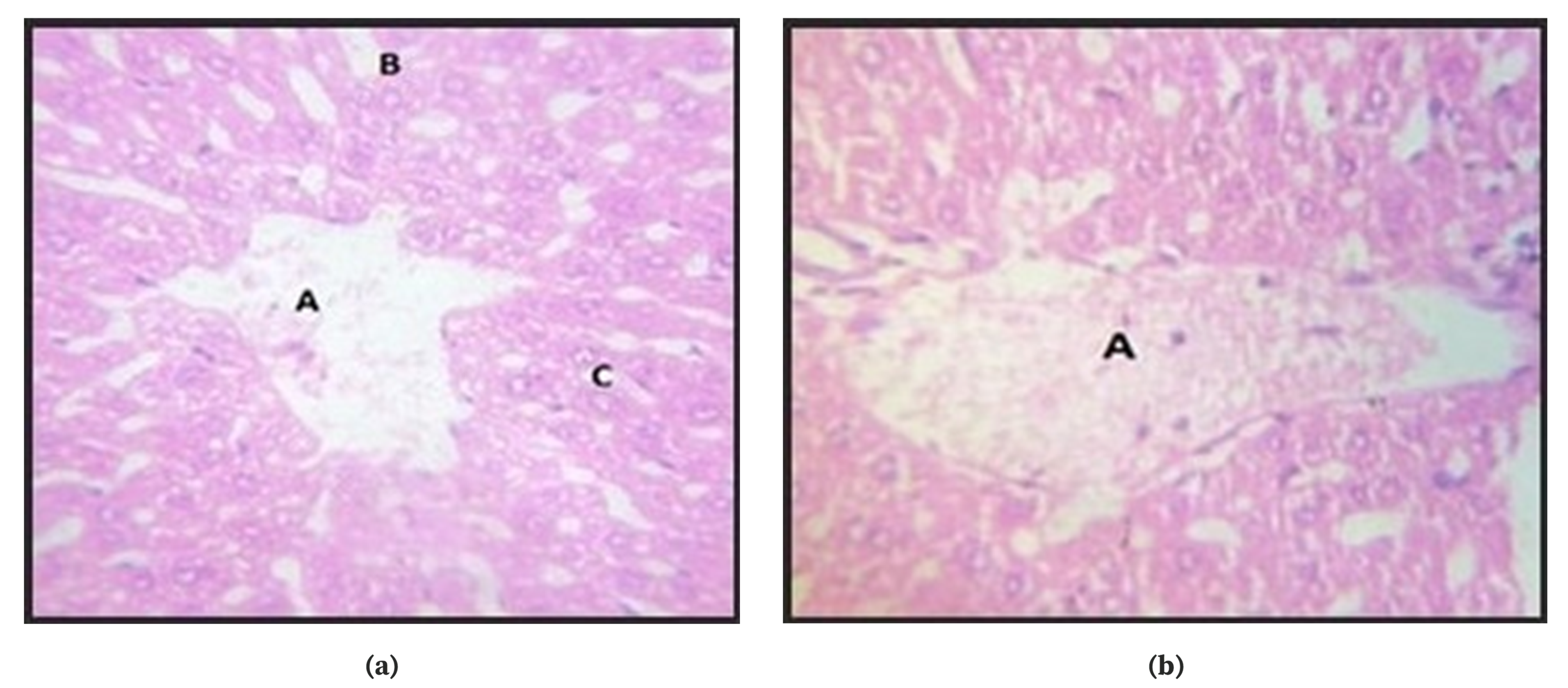
Figure 2. Histology of the diabetic untreated group. (a) Central vein (A) showing a dilated lumen and surrounding hepatocyte degeneration (B); sinusoids (C) appear congested. (b) Pericentral area showing mild collagen deposition (A) and focal inflammatory infiltration (B). H&E × 400.
3.5. Diabetic Kasni-treated
Sections from the Kasni-treated group demonstrated remarkable reversal of diabetic hepatic injury (Figure 3). Hepatocytes exhibited near-normal morphology with reduced cytoplas¬mic vacuolation and the restoration of regular hepatic cords around a patent central vein. Steatosis and inflammation were minimal, and sinusoidal spaces were comparable to those of the controls. Only 2 of the 10 mice displayed mild residual fatty acid changes. No fibrosis or inflammatory foci were detected. These histological improvements correspond with the observed reduction in blood glucose levels following Kasni extract administration.
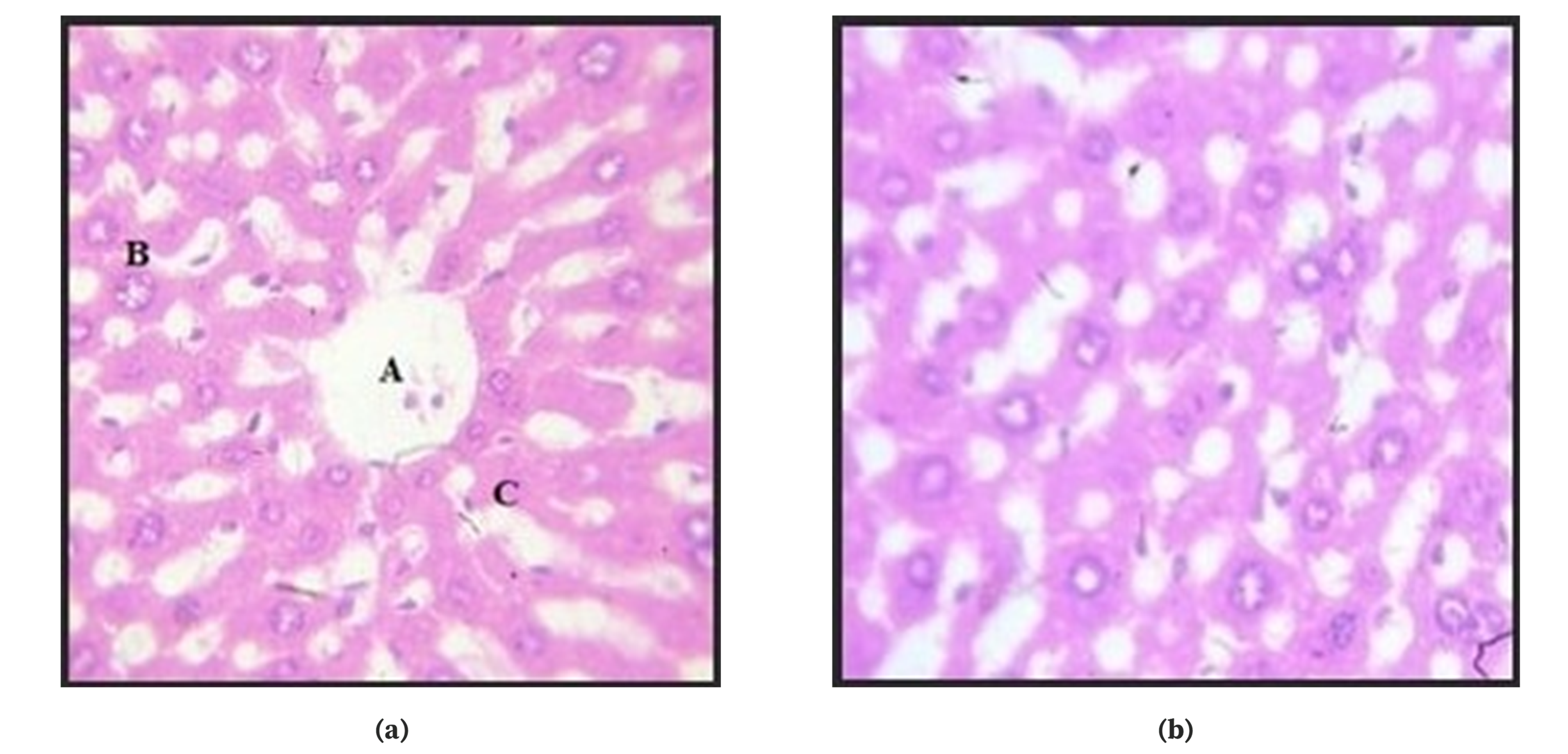
Figure 3. Histology of the Kasni-treated diabetic group. (a) Central vein (A) with organized hepatic plates (B) and normal sinusoidal spaces (C). (b) Higher magnification image showing the absence of steatosis and inflammatory infiltrates. H&E × 400.
4. Discussion
The untreated diabetic mice developed both gross and microscopic features of liver injury, including enlargement of the liver and pallor, cytoplasmic vacuolation of liver cells, sinusoidal congestion, and deposition of early pericentral collagen. These histological changes are consistent with diabetes-related steatohepatitis and reflect oxidative and metabolic stress within the liver parenchyma. In contrast, the administration of aqueous Kasni seed extract orally for 28 days significantly improved liver changes in the Kasni treatment group, which presented near-normal hepatic features with the restoration of the central vein, arranged hepatic cords, and the absence of inflammation, steatosis or fibrosis. The gross appearance of the liver was also normal, with restoration of its color, texture, and consistency. These findings highlighted that C. intybus seed extract has a hepatoprotective effect on alloxan-induced diabetic mice, supporting its use as a hepatoprotective agent and an alternative to conventional pharmaceutical agents used for diabetes-related liver pathologies.
Hyperglycemia, the defining feature of DM, plays an important role in hepatic impairment. It causes oxidative stress and inflammation, resulting in histopathological characteristics such as ballooning of hepatocytes, steatosis, dilatation of sinusoids, and fibrosis [36,37]. These metabolic abnormalities may lead to hepatic steatosis, fibrosis, and hepatocellular injury, especially in the absence of blood glucose control [38]. Studies have reported that metabolic abnormalities such as obesity, dyslipidemia, and insulin resistance, which are frequently found in individuals with T2DM, are major contributors to nonalcoholic steatohepatitis (NASH) as well as other chronic liver diseases [39]. Moreover, Li et al. reported that diabetes can lead to nuclear abnormalities in the cells of the liver, including nuclear enlargement, binucleation, and irregularity of chromatin distribution, all of which are features of nuclear stress [40].
Histopathological examination of the liver tissues of diabetic Group B mice treated with saline revealed extensive pathological features, such as hepatic fibrosis, central vein irregularity, distension of the hepatic sinusoids, and intracellular fatty globules within hepatocytes. These are typical characteristics of hepatic steatosis and fibrosis, both of which are typically linked with diabetes-induced liver damage. These results concur with those of Qureshi et al., who examined the role of alloxan in the liver cells of diabetic rats and documented comparable patterns of structural alterations in the central vein as well as in hepatic cells, accompanied by increased fibrosis [41]. Moreover, Dubey et al. reported that diabetic rats exhibit dilated sinusoids as well as increased cellularity of Kupffer cells, features also observed in our control group of diabetic mice [42].
However, in contrast to the results of Groups A or B, in Group C (diabetic mice treated with Kasni), the liver histology showed remarkable recovery.. The central vein had a normal structure, the cords of hepatocytes were arranged regularly, and fatty infiltration decreased significantly. Reduced inflammation in hepatic sinusoids as well as the absence of fibrotic zones suggested that treatment with Kasni resulted in histological recovery. These results are in line with earlier observations of the hepatoprotective activity of Kasni. Amirkhani et al. reported that treatment with Kasni restored the normal structure of the central vein, reduced dilation of the sinusoid, and abolished fat globules in liver tissues with oxymetholone toxicity [43]. Additionally, Yadav et al. reported that Kasni protected against carbon tetra chloride-evoked liver injury in rats, verifying its effectiveness in decreasing fibrosis as well as hepatocellular necrosis [44].
The antioxidant and anti-inflammatory activities of the bioactive phytochemicals of Kasni, such as chicoric acid, caffeic acid, and inulin, are also considered to be the reasons for such hepatoprotective actions [45]. Phytochemicals have the capacity to scavenge reactive oxygen species and suppress inflammatory cytokine production, protecting hepatic cells from oxidative and inflammatory damage [46]. The alignment of hepatic cells and lack of steatosis in the Kasni-treated group are also indicative of the cytoprotective action of Kasni extract in reducing diabetes-related liver damage.
In addition to liver protection, Kasni therapy also caused a reduction in blood glucose in diabetic mice. The antihyperglycemic activity of chicoric acid, the predominant compound in Kasni, supports the results of this study [47]. This dual activity of drugs to control glycemia and protect the liver presents Kasni as an ideal adjunct therapy for diabetes treatment.
The experimental design, use of an alloxan-induced diabetic mouse model, inclusion of both untreated and Kasni-treated groups with a control group, standardized animal handling and dosing protocols, and combination of gross morphological features as well as histopathological analysis to obtain evidence highlight potential strengths of the study. However, the study did not consider biochemical and molecular parameters or liver enzyme profiles, and no statistical analysis was employed to quantify the extent of hepatic recovery. Moreover, the limited sample size may restrict the generalizability and statistical robustness of the findings. Further research with larger groups is needed to substantiate these observations.
5. Conclusions
The findings of this study highlighted that aqueous seed extract of Kasni provides hepatoprotection in alloxan-induced diabetic mice and that treatment with Kasni effectively restored hepatic structures, reduced steatosis and inflammation, and normalized gross liver morphology compared with those of untreated diabetic controls. These findings also suggest that Cichorium intybus has potential as a complementary therapeutic agent for diabetes-related liver injuries.
Author contributions
Conceptualization, MH, and HA; methodology, MH, HA, JS, AR, and ZS; software, MH, and ZS; validation, MH, JS, and AR; formal analysis, MH, and HA; investigation, MH, HA, JS, AR, and ZS; resources, MH, HA, AR, and ZS; data curation, MH; writing—original draft preparation, MH, HA, and JS; writing—review and editing, MH, JS, AR, and ZS; visualization, MH, JS, and AR; supervision, MH; project administration, HA, JS, AR, and ZS. All authors have read and agreed to the published version of the manuscript.
Publication history
| Received | Revised | Accepted | Published |
| 01 July 2024 | 27 September 2024 | 16 October 2024 | 31 December 2024 |
Funding
This research received no specific grant from the public, commercial, or not-for-profit funding agencies.
Ethics statement
This study obtained approval from the Institutional Ethical Review Board of the University of Education (No. UE/IRB/2023/CHEM-011).
Consent to participate
Not applicable.
Data availability
The data supporting this study's findings are available from the corresponding author, Hamza Asghar, upon reasonable request.
Acknowledgments
None.
Conflicts of interest
The authors declare no conflicts of interest.
Copyright
© 2024 The Author(s). This is an open access article distributed under the terms of the Creative Commons Attribution (CC BY) License. The use, distribution, or reproduction in other forums is permitted, provided the original author(s) and the copyright owner(s) are credited and that the original publication in this journal is cited, in accordance with accepted academic practice. No use, distribution or reproduction is permitted which does not comply with these terms.
Publisher's note
Logixs Journals remains neutral concerning jurisdictional claims in its published subject matter, including maps and institutional affiliations.