

Effects of segmental muscle vibration on upper limb function in subacute poststroke patients
Published: 21 March 2026
Volume 5
Abstract
Stroke-related upper limb dysfunction and spasticity are main causes of long-term disability which affect functional independence and quality of life notably among patients. Segmental muscle vibration (SMV) has arisen as a promising rehabilitation approach to improve motor recovery and reducing spasticity in poststroke patients. This study aimed to compare the effects of the SMV on upper limb function and spasticity in subacute poststroke patients treated with two vibration frequencies (i.e., 60 Hz and 120 Hz) with those of patients treated with traditional therapy alone. Twenty-eight participants (N = 28) were randomized into three groups including two experimental groups that received extra SMV at 60 Hz and 120 Hz, and a control group that received conventional physiotherapy. The interventions were provided twice a week for eight weeks. The study employed Fugl-Meyer Assessment for Upper Extremes (FMA-UE), Modified Ashworth Scale (MAS) and Motor Assessment Scale were used to measure the outcomes. Upper limb function showed significant improvements across all groups and a decrease in spasticity at baseline (p < 0.05). Nevertheless, the postintervention between-group results were not significantly different between two SMV and control groups (p > 0.05). SMV in combination with traditional therapy is effective, but there was no difference in the benefits of 60 Hz versus 120 Hz in patients with subacute stroke treated with conventional therapy alone.
Keywords
Physical therapy modalities; Muscle spasticity; Recovery of function; Segmental muscle vibration; Stroke rehabilitation; Upper extremity
1. Introduction
Stroke is among the leading causes of long-term disability and mortality globally and is defined by the National Institute of Neurological Disorders and Stroke (NINDS) as a temporary or permanent impairment of cerebral function due to ischemia or bleeding of selected areas of the brain [1]. WHO defines stroke as the rapid development of neurological symptoms that remain for > 24 hours or cause death, with no clinically visible cause other than vascular origin [2]. Although healthcare has improved globally, stroke remains a socioeconomic burden, especially in developing countries where rehabilitation facilities are underdeveloped [3].
In major burden-of-disease studies, ischemic stroke is the most commonly reported type, while the remainder comprises intracerebral and subarachnoid hemorrhage [4]. Hemorrhagic stroke is less frequent but tends to be more severe and is commonly caused by ruptured aneurysms in the circle of Willis [5]. Impairment of the upper limbs after stroke is typical, and up to 80% of stroke survivors require rehabilitation to restore functional independence [6]. Spasticity is a significant cause of disability, which is a velocity-dependent surge in muscle tone because of upper motor neuron lesions, causing impaired movement, contractures, and restriction of daily activities [7].
Traditional rehabilitation is instrumental in the process of motor recovery, but a considerable number of patients still display chronic upper limb deficits after therapy [8]. Different methods of rehabilitation, e.g., constraint-induced movement therapy, robotics, mirror therapy, and functional electrical stimulation have been proposed to increase neuroplasticity and improve functional outcomes [9]. Over recent years, vibrational therapy has shown potential as a promising modality that can result in reducing spasticity and improving motor performance following stroke.
Segmental muscle vibration (SMV) activates muscle spindle Ia afferents and modulates corticospinal excitability, leading to improved muscle activation, proprioceptive stimulation, and potential reorganization of cortical pathways [10]. Studies have demonstrated that vibrational frequencies ranging from 30 Hz to 120 Hz may reduce spasticity, improve coordination, and enhance motor recovery in poststroke individuals [11,12]. However, the evidence remains inconsistent, and appropriate parameters, including frequency, amplitude, as well as duration have yet to be established.
Several randomized and pilot trials on segmental or local muscle vibration have predominantly recruited chronic stroke patients, e.g., SMV, to improve reaching or gait in chronic stroke cohorts [13]. A recent systematic review of vibration therapy for post‑stroke spasticity revealed that most included randomized controlled trials were in chronic or mixed chronic/subacute populations and that the protocols (including frequency) used were heterogeneous, with no clear consensus on optimal frequencies [14]. The existing evidence underscores the need for standardized vibration protocols and targeted trials in acute and subacute stroke patients to establish clearer therapeutic guidelines. We hypothesized that the addition of the SMV technique would prove to be more effective than conventional rehabilitation therapy alone for improving upper limb function and reducing spasticity among stroke patients.
2. Methods
2.1. Sample size and study design
The initial estimate of sample size was made using G*Power with Fugl–Meyer scores as the outcome variable, and 100 participants were needed. Owing to COVID-19 restrictions, the final sample included 30 participants, with 10 patients in each group. Two participants from the control group dropped out because of death, and the final analysis included twenty-eight participants (N = 28).
This randomized controlled trial was carried out to determine the effects of SMV on upper limb function among patients with subacute poststroke. Three groups were formed: a control group receiving only conventional physiotherapy and two experimental groups receiving conventional therapy combined with SMV at two different frequencies, one at 60 Hz and one at 120 Hz.
2.2. Study duration and setting
This study was conducted in Cure Medical Complex, Islamabad, between February 2020 and October 2020. All the participants had a treatment period of 8 weeks (2 sessions per week).
2.3. Ethics approval
The study was approved by the Research Ethical Committee (REC), Riphah College of Rehabilitation Sciences, Riphah International University, Islamabad (No. Riphah/RCRS/REC/00654), followed by the approval from Board of Advanced Studies and Research (BASR). This study was not registered as a clinical trial prospectively owing to the development of an intervention protocol based on previously published as well as established methodologies, and our study procedures adhere to these published protocols [10,12,14,15,16].
2.4. Sampling method and randomization
The participants were selected through purposive sampling according to specific inclusion criteria. Both types of patients (Ischemic and Hemorrhagic) were included. The three study groups were randomized by means of a sealed-envelope technique. Study included subacute poststroke patients of both genders (males and females) who were between 35 and 65 years of age and who had modified Ashworth scale (MAS) scores of less than three (≤ 3). However, patients with other neurological disorders, diabetic ulcers, limb infections, or amputations, severe cardiovascular disease (CVD) or unstable angina, orthopedic complications, and chronic medical instability were not recruited. The following validated instruments were used for assessment at baseline and after 16 treatment sessions: the Fugl-Meyer Assessment for Upper Extremes (FMA-UE), which measures motor recovery, sensation, coordination, and joint integrity (reliability = 0.88), and the MAS, which measures muscle tone on a 6-point scale (reliability = 0.567). Motor Assessment Scale: This scale consists of eight tasks that determine functional motor performance, with each task rated on a scale of 0–6.
2.5. Intervention and vibration device
The treatment adopted was conventional therapy along with SMV for ischemic and hemorrhagic patients. The control group (A) received 40 minutes of conventional physiotherapy, including active and passive range-of-motion (ROM) exercises along with stretching, strengthening, and balance training, adjusted tailored to the participant’s needs. The experimental group (B) received the same conventional therapy plus 10 minutes of SMV at 60 Hz applied to the biceps brachii (BB) and extensor carpi radialis longus (ECRL) applied to the entire muscle from origin to insertion. The experimental group (C) received conventional therapy plus 10 minutes of vibration at 120 Hz applied to the same muscles. SMVs were delivered from the origin to the insertion using the Myovolt vibration system, a wearable nonelectrical device that generates localized mechanical vibration. The machine has a 10-minute cyclic duration of operation (fixed on the muscle using a belt so it can be stationary when vibrating at the target location) and can provide safe, controlled vibrational stimulation for use in neuromuscular applications. Medications for ischemic stroke included alteplase, antiplatelets, and anticoagulants, whereas medications for hemorrhagic stroke included labetalol, protamine, anticonvulsants, and mannitol.
The CONSORT flow chart for the recruitment, allocation, and follow-up of participants is shown in Figure 1.
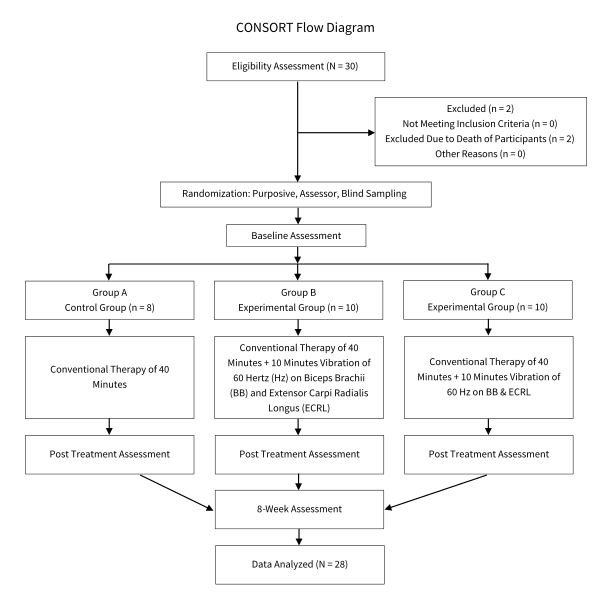
Figure 1. CONSORT flow chart for recruitment of participants, allocation, and follow-up.
2.6. Data analysis
Statistical analysis was performed using SPSS (v.23.0). In addition to descriptive statistics, Wilcoxon signed-rank test was used to compare within-group pre- and postintervention measurements, whereas differences between groups were compared by the Mann–Whitney U test and Kruskal–Wallis H test. Statistical significance was assessed using p values (i.e., p < 0.05).
3. Results
Initially, 30 subacute stroke patients were randomly selected. An 8-week intervention was conducted, and finally 28 patients completed follow-up after the death of two participants in Group A (the control group). The participants were divided into the following groups: a control group (Group A, n = 8), who underwent conventional therapy only, and two experimental groups [Group B and Group C (n = 10, each group)], which received conventional therapy in addition to SMV at frequencies of 60 Hz and 120 Hz, respectively.
Table 1 delineates the demographic as well as clinical attributes of the patients. Baseline analysis confirmed that the three groups were alike at the start of the study, and no significant differences existed in terms of age, gender distribution, FMA-UE scores, MAS scores of the BB or ECRL, as well as Motor Assessment Scale scores (all p > 0.05).
| Patients’ Characteristics | Group A (Control) (n = 8) |
Group B (Segmental Muscle Vibration 60 Hertz) (n = 10) |
Group C (Segmental Muscle Vibration 120 Hertz) (n = 10) |
p Value | |
| Median (IQR) | Median (IQR) | Median (IQR) | |||
| Age (years), Mean ± SD | 51.87 ± 4.88 | 54.40 ± 10.64 | 51.50 ± 3.95 | - | |
| Gender | Male, n (%) | 7.00 (87.50) | 7.00 (70.00) | 8 (80.00) | - |
| Female, n (%) | 1.00 (12.50) | 3.00 (30.00) | 2 (20.00) | ||
| Fugl-Meyer Assessment for upper extremity (Sec A) | 29.00 (21.00) | 28.00 (8.00) | 27.00 (12.00) | 0.831 | |
| Modified Ashworth Scale (biceps brachii) | 2.00 (3.00) | 4.00 (2.00) | 4.00 (2.00) | 0.455 | |
| Modified Ashworth Scale (extensor carpi radialis longus) | 2.00 (3.00) | 2.00 (4.00) | 4.00 (2.00) | 0.062 | |
| Motor Assessment Scale | 39.00 (12.00) | 39.00 (26.00) | 40.00 (10.00) | 0.684 | |
| * Statistical test: Wilcoxon signed-rank test. | |||||
Table 2 presents the baseline-to-postintervention changes within each group. Within-group analyses revealed statistically significant improvements between baseline and postintervention in all three intervention protocols. Significant improvements in upper limb motor function were observed in the FMA-UE and the Motor Assessment Scale (all p values < 0.05). Moreover, MAS scores revealed that spasticity was greatly decreased in the BB and ECRL across all groups (all p values < 0.05).
| Outcome Measures | Baseline | Post-Intervention | p Value | |
| Median (IQR) | Median (IQR) | |||
| Group A (Control) | ||||
| Fugl-Meyer Assessment for upper extremity (Sec A) | 29.00 (21.00) | 34.00 (14.00) | 0.012 ** | |
| Modified Ashworth Scale (biceps brachii) | 2.00 (3.00) | 1.00 (3.00) | 0.007 ** | |
| Modified Ashworth Scale (extensor carpi radialis longus) | 2.00 (3.00) | 1.00 (3.00) | 0.007 ** | |
| Motor Assessment Scale | 39.00 (12.00) | 45.00 (8.00) | 0.011 ** | |
| Group B (Segmental Muscle Vibration 60 Hertz) | ||||
| Fugl-Meyer Assessment for upper extremity (Sec A) | 28.00 (8.00) | 33.00 (8.00) | 0.005 ** | |
| Modified Ashworth Scale (biceps brachii) | 4.00 (2.00) | 1.00 (1.00) | 0.005 ** | |
| Modified Ashworth Scale (extensor carpi radialis longus) | 2.00 (4.00) | 1.00 (1.00) | 0.004 ** | |
| Motor Assessment Scale | 39.00 (26.00) | 44.00 (30.00) | 0.018 ** | |
| Group C (Segmental Muscle Vibration 120 Hertz) | ||||
| Fugl-Meyer Assessment for upper extremity (Sec A) | 27.00 (12.00) | 30.00 (7.00) | 0.005 ** | |
| Modified Ashworth Scale (biceps brachii) | 4.00 (2.00) | 2.00 (2.00) | 0.003 ** | |
| Modified Ashworth Scale (extensor carpi radialis longus) | 4.00 (2.00) | 2.00 (2.00) | 0.003 ** | |
| Motor Assessment Scale | 40.00 (10.00) | 45.00 (6.00) | 0.005 ** | |
| * Statistical test: Mann–Whitney U test. ** p < 0.05, statistically significant. | ||||
Table 3 shows the postintervention comparisons between groups. Comparisons of postintervention results revealed no statistically significant differences between the groups. Postintervention FMA-UE (p = 0.774), MAS (BB) (p = 0.737), MAS (ECRL) (p = 0.096) and Motor Assessment Scale (p = 0.583) scores did not significantly differ between the control group and the two SMV groups.
| Outcome Measure | Group A (Control) | Group B (Segmental Muscle Vibration 60 Hertz) |
Group C (Segmental Muscle Vibration 120 Hertz) |
p Value |
| Median (IQR) | Median (IQR) | Median (IQR) | ||
| Fugl-Meyer Assessment for upper extremity (Sec A) | 34.00 (14.00) | 33.00 (8.00) | 30.00 (7.00) | 0.774 |
| Modified Ashworth Scale (biceps brachii) | 1.00 (5.00) | 1.00 (1.00) | 2.00 (2.00) | 0.737 |
| Modified Ashworth Scale (extensor carpi radialis longus) | 1.00 (5.00) | 1.00 (1.00) | 2.00 (2.00) | 0.096 |
| Motor Assessment Scale | 45.00 (8.00) | 44.00 (30.00) | 45.00 (6.00) | 0.583 |
| * Statistical test: Kruskal‒Wallis H test. | ||||
4. Discussion
SMV is a well-tolerated and safe intervention that has been investigated for its potential to increase motor recovery as well as neuroplasticity after stroke. However, there is a dearth of literature regarding its effectiveness during the subacute stage of stroke. In the present study, Group A received conventional rehabilitation therapy alone, Group B received conventional rehabilitation therapy with 60 Hz SMV, and Group C received conventional therapy with 120 Hz SMV. MAS evaluation revealed that participants in all three groups experienced similar reductions in spasticity. Motor Assessment Scale results revealed similar improvements: 39 to 45 for Group A, 39 to 44 for Group B and 40 to 45 for Group C. Our study revealed improved functional levels in patients with subacute stroke following the invention period. Improvements were confirmed by MAS, motor assessment scores, and Fugl–Meyer assessment scores. Moreover, our evaluation revealed that all three groups showed comparable improvements at the functional level, as measured by the Fugl–Meyer Assessment and Motor Assessment Scale, with significant reductions in spasticity observed via the MAS.
Consistent with our study results, Noma et al reported improvements in functional level when MAS was used after vibration therapy was applied to spastic muscles, especially when it was combined with conventional therapy [17,18]. Another study using focal muscle vibration and neurokinetic facilitation measured MAS outcomes in three groups of patients, with p values of 0.027, 0.026 and 0.042, respectively. These results highlight that vibrational therapy alone significantly reduces spasticity, likely through effects on inhibitory circuits at both the cortical and the spinal level [9].
The results of the current study revealed that a vibrational session before conventional therapy reduces spasticity and relaxes muscles for further exercise. Similarly, a study conducted in 2017 by Park et al. applied 20 minutes of vibration before therapy in children suffering from cerebral palsy and reported improved spasticity reduction compared with conventional therapy alone [19]. Costantino et al evaluated MAS and FMA-UE in patients receiving vibrational therapy versus those receiving sham therapy and reported improvements in FMA-UE mean scores from 82.82 (SD = 20.04) to 94.24 (SD = 19.40) for Group A and from 83.33 (SD = 17.81) to 84.27 (SD = 17.25) for Group B (p < 0.05) [20].
The available data show that much remains to be understood about the parameters of vibration, especially since most of the studies focus on chronic or mixed stroke populations. Not all frequency-specific protocols are the same, which makes the clarity of clinical recommendations complicated because of the absence of consensus. Hence, well-structured, focused, and standardized controlled trials in acute and subacute stroke patients are needed to describe more specific treatment guidelines and improve clinical practice. This study has several limitations. First, data collection was affected by the COVID-19 pandemic, allowing us to recruit fewer patients, ultimately limiting the generalizability of the findings. Second, patients were assessed only at baseline and then after an eight-week follow-up; however, shorter-term follow-ups may provide a more accurate evaluation of SMV effects.
5. Conclusions
This study revealed that vibration therapy, along with conventional therapy, effectively reduced spasticity and upper limb function. No differences were observed among the three groups; all the groups showed similar improvements. Further research is recommended to evaluate the effects of vibrational therapy on improving functional outcomes and reducing spasticity, which are common sensorimotor impairments after stroke.
Author contributions
Conceptualization, IF, and SA; methodology, IF, SA, ASS, YW, MNS and IA; software, SS, YW, and MNS; validation, SS, YW, and MNS; formal analysis, SS, YW, and MNS; investigation, SS, YW, and MNS; resources, IA; data curation, SS, YW, and MNS; writing—original draft preparation, IF, SA, ASS, YW, and MNS; writing—review and editing, IA; visualization, SS, YW, and MNS; supervision, IA; project administration, IA. All authors have read and agreed to the published version of the manuscript.
Publication history
| Received | Revised | Accepted | Published |
| 12 December 2025 | 14 March 2026 | 19 March 2026 | 21 March 2026 |
Funding
This research received no specific grant from the public, commercial, or not-for-profit funding agencies.
Ethics statement and consent to participate
The study was approved by the Research Ethical Committee (REC), Riphah College of Rehabilitation Sciences, Riphah International University, Islamabad (No. Riphah/RCRS/REC/00654), followed by the approval from Board of Advanced Studies and Research (BASR). This study was not registered as a clinical trial prospectively owing to the development of an intervention protocol based on previously published as well as established methodologies, and our study procedures adhere to these published protocols.
Consent to publication
Not applicable.
Data availability
The data supporting this study's findings are available from the corresponding author, Imran Amjad, upon reasonable request.
Acknowledgments
We sincerely acknowledge Dr. Imran Amjad for his invaluable guidance, constructive feedback, and supervision throughout this study. His expertise and insightful suggestions significantly enhanced the quality and scientific rigor of this research.
Conflicts of interest
The authors declare no conflicts of interest.
Copyright
© 2026 The Author(s). This is an open access article distributed under the terms of the Creative Commons Attribution (CC BY) License. The use, distribution, or reproduction in other forums is permitted, provided the original author(s) and the copyright owner(s) are credited and that the original publication in this journal is cited, in accordance with accepted academic practice. No use, distribution or reproduction is permitted which does not comply with these terms.
Publisher's note
Logixs Journals remains neutral concerning jurisdictional claims in its published subject matter, including maps and institutional affiliations.