

Association between premenstrual syndrome severity and academic performance among adolescent girls in Bara Kahu, Islamabad
Published: 31 December 2025
Volume 4
Abstract
Premenstrual syndrome (PMS) affects many adolescent girls in terms of physique, behavior, and psychology. However, evidence regarding the association between PMS severity and academic performance among adolescents in peri-urban areas of Pakistan remains limited. This cross-sectional analytical study was conducted from May to September 2024 among 270 adolescent girls enrolled in secondary and higher secondary schools in Bara Kahu, Islamabad, using multistage cluster sampling. This study determined the frequency and severity of PMS and examined its association with academic performance. Overall, 85.93% of the participants reported PMS symptoms, with 35.19% experiencing mild, 30.00% moderate, 12.59% severe, and 8.15% very severe symptoms. For inferential analysis, PMS severity was categorized into mild, moderate, and severe levels. A statistically significant association was observed between PMS severity and academic performance (χ² = 34.565; p < 0.001). Spearman’s rank correlation further demonstrated a significant negative correlation between PMS severity and academic performance (ρ = −0.356, p < 0.01), indicating poorer academic performance with increasing symptom severity. These findings suggest that greater PMS severity is associated with reduced academic performance among adolescent girls in peri-urban Islamabad. While causality cannot be inferred because of the cross-sectional design, the results highlight the relevance of menstrual health in educational contexts during adolescence.
Keywords
Premenstrual syndrome; Adolescent girls; Academic performance; Peri-urban area
1. Introduction
The menstrual cycle in females often causes psychological and physiological symptoms that affect daily life and routines, with approximately 80% of women worldwide experiencing at least one symptom before menstruation [1]. Premenstrual syndrome (PMS) is a group of clinically important physical and psychological symptoms among females that begins around day 14 of the cycle and continues until seven days after the start of menstruation [2]. These symptoms range widely from bloating, pain, and headaches to mood swings, anxiety, and social withdrawal. In severe cases, premenstrual dysphoric disorder (PMDD), a recognized mental health condition, can occur and requires appropriate clinical attention [3]. Major risk factors for PMS include demographic aspects, psychological stress, menstrual cycle characteristics, and lifestyle habits such as smoking, alcohol consumption and caffeine intake, exercise, and diet [4].
PMS is a prevalent condition, with studies reporting a pooled prevalence of 47.8% worldwide. Its prevalence appears to be higher in Asian countries than in Western nations [5]. Studies around the world have revealed a substantial relationship between PMS and academic performance. A Nigerian study concluded that this disorder had a negative effect on reading comprehension and homework completion for the majority of students and that a considerable number of students reported a high negative effect on their academic performance due to PMS [6]. Similarly, one study in Thailand reported significant differences in academic scores between the PMS and non-PMS groups. PMSs are associated with various challenges, including a lack of concentration and motivation, poor individual and collaborative work performance, and low scores. [7].
In a study among adolescents in Bangladesh, 65.85% of participants reported a loss of concentration during educational activities due to PMS, which subsequently led to decreased academic performance [8]. Moreover, in Indian studies among adolescents, PMS is more likely to cause poor academic performance among students, as PMS is among the most common problems among high school students, and regular screening of PMS in school-aged girls has been suggested to improve their academic performance [9].
Various studies in Pakistan have also indicated that PMS is associated with academic performance among young girls. For example, in a cross-sectional survey of adolescents in Arif Wala city, Punjab, the prevalence of PMS was found to be 75%, and this study revealed that PMS was distressing and that females experiencing these symptoms reported impairment in their school activities [10]. Another study conducted in Islamabad reported a prevalence of PMS among adolescent students of 81% and reported associations between PMS symptoms and academic life as well as emotional well-being, highlighting the need for increased awareness and support regarding menstrual health education [11].
Although various studies have highlighted the prevalence of PMS across the globe, quantitative scientific evidence on its frequency, severity, and association with academic performance among adolescent girls in Pakistan, particularly in peri-urban regions, remains limited. Compared with urban areas, the peri-urban areas of Islamabad are a specific focus because of disparities in access to healthcare services, educational support, and increased cultural stigma. Therefore, this study investigates the frequency, severity, and association of PMS severity levels with academic performance among adolescent girls in Bara Kahu Islamabad, which is a mixture of urban and rural communities that represents the demographic diversity of Islamabad.
2. Methodology
2.1. Study design, setting and population
A cross-sectional analytical study was conducted among adolescent female students (aged 13–19) enrolled in secondary and higher secondary schools in Bara Kahu, the largest peri-urban settlement in Islamabad.
2.2. Study duration
The study was conducted for a period of approximately 5 months from May to September 2024.
2.3. Selection criteria
2.3.1. Inclusion criteria
The study included female secondary school students aged 13–19 years who had reached menarche and were willing to participate in the study.
2.3.2. Exclusion criteria
Female secondary and higher secondary school students with a known history of gynecological, endocrine, or chronic medical conditions (e.g., polycystic ovary syndrome (PCOS), endometriosis, pelvic inflammatory disease (PID), and thyroid disorders) that could independently influence menstrual symptoms or academic functioning were excluded from the study on the basis of self-reported medical history.
2.4. Sample size calculation
Sample size for detecting a correlation of r = 0.40 was calculated using the Fisher z‑transform formula with a two‑sided α = 0.05 and 80% power. The initial required sample size was 47. After applying a design effect of 4.3 (ICC = 0.05, mean cluster size ≈ 67), the required sample increased to 203 participants (≈ 4 clusters) [12]. In order to account for potential dropouts, absenteeism, and incomplete questionnaires, the sample size was further increased by 35%, resulting in a final sample size of 275 participants.
2.5. Sampling technique
The sampling technique used in this study was multistage cluster sampling, where schools served as clusters. In the first stage, four public educational institutions at the secondary and higher secondary levels were randomly selected via the balloting method from the list of educational institutions in Bara Kahu under the Federal Directorate of Education, Islamabad. Schools were selected to reflect variation in school level (secondary and higher secondary) and student enrollment size, thereby ensuring coverage of the adolescent female school-going population. The four randomly selected schools were Is¬lamabad Model School for Girls, Lakhwal (I–XII) (n = 121); Islamabad Model College for Girls, Bara Kahu (XI–XII) (n = 40); Islamabad Model School for Girls, Mera Bhagwal (I–X) (n = 77); and Islamabad Model School for Girls, Malot (I–X) (n = 32).
In the second stage, class attendance registers served as the sampling frame, and systematic random sampling was applied. A random starting point was selected, after which every third eligible student was included, regardless of their PMS status. Eligible students who declined participation were excluded. Classes from the sixth to intermediate level were purposively included to encompass the 13–19-year age range, the target population for assessing PMS frequency during adolescence.
PMS status was not used as a screening criterion at the sampling stage; rather, all selected participants were included and subsequently assessed for self-reported PMS symptoms via the Premenstrual Syndrome Scale (PMSS) during data analysis [13].
2.6. Data collection tool
Structured questionnaires were administered to assess PMS symptoms and academic performance. The PMS was self-reported via the PMSS, and a one-time questionnaire is not a diagnostic tool; therefore, PMSS scores are described as self-reported PMS symptoms rather than a clinical diagnosis. To differentiate PMS from normal menstrual symptoms, the functional impact of symptoms on daily activities and academic performance were considered.
The first part of the questionnaire included participants’ sociodemographic information and menstrual data, and the second part included an assessment of PMS-related physical, psychological, and behavioral symptoms via the PMSS [13], which is based on the Diagnostic and Statistical Manual of Mental Disorders (DSM) criteria and was designed for South Asian adolescent populations [14]. The internal consistency of the PMSS was excellent, with a Cronbach’s alpha of 0.944 across 40 items. The participants self-reported symptom presence and severity on the basis of their recall of their previous three menstrual cycles. The third part included an assessment of academic performance via the academic performance score (APS) [15]. The APS, an eight-point scale tool, determines study habits, class participation, concentration, interest in academics, effort in academics, and problem-solving ability among respondents. The APS also showed strong internal consistency, with a Cronbach’s alpha of 0.912 across the eight items. Scores were calculated by summing item responses; higher scores indicate better academic performance.
Back translation of the questionnaire was conducted by experts to ensure the accuracy and cultural appropriateness of the questionnaire.
2.7. Study measures
Premenstrual symptoms were assessed via the PMSS, a 40-item standardized self-report questionnaire designed to assess the physiological, psychological, and behavioral symptoms of PMS among females. Each item on the scale was rated on a 5-point Likert scale ranging from 1 (“never”) to 5 (“always”), resulting in a total score between 40 and 200, with higher scores indicating greater severity of premenstrual symptoms. The total scores of the PMSS were further classified into five domains on the basis of symptom severity: no PMS symptoms (≤ 40), mild (41–80), moderate (81–120), severe (121–160), and extremely severe (161–200) [13].
Academic performance was determined via the APS, which consists of eight items, each rated on a 5-point Likert scale; each individual item score was summed to obtain a total APS score ranging from 8–40, with higher scores revealing better academic performance. The APS scores were categorized into five domains of academic performance by employing a percentile-based approach, and the responses were graded as very poor (≤ 20th percentile), poor (21st–40th percentile), average (41st–60th percentile), good (61st–80th percentile), or excellent (> 80th percentile).
For inferential analysis, PMS severity categories were collapsed from five levels (i.e., no PMS, mild, moderate, severe, and very severe) into three levels (mild, moderate, and severe) by excluding participants without PMS and merging very severe cases into the severe category. Similarly, academic performance categories were consolidated from five levels into three ordered groups (poor, average, and good) by combining related categories to achieve an adequate cell distribution for chi-square analysis.
2.8. Statistical analysis
Descriptive statistics were used to summarize sociodemographic characteristics, the distribution of PMS severity, and academic performance categories. The association between PMS severity (mild, moderate, or severe) and academic performance (poor, average, or good) was assessed using the chi-square test. Spearman’s rank correlation was also used to determine the associations between PMS severity, academic performance, age, academic level, and school absenteeism. A p value equal to or < 0.05 was considered to indicate statistical significance. All analyses were performed using SPSS version 27.0.
2.9. Ethical considerations
Ethical approval for the study was obtained from the Institutional Review Board of Health Services Academy (No. 000443/HSA/MSPH-2022). Furthermore, permission for data collection was obtained from targeted school principals, and participants were completely informed about the study's purpose and were assured that voluntary participation and the right to withdraw at any time were clearly conveyed. Moreover, written parental/guardian consent and adolescent assent were obtained prior to the study. The data collected was not used for any purpose other than this research, and the confidentiality and privacy of the participants were maintained throughout the study.
3. Results
Among the 275 participants, 270 completed the questionnaire, resulting in a response rate of 98.18%. The mean patient age was 14.87 ± 1.88 years. The majority of the participants (82.22%) were aged 13–16 years, whereas 17.78% were aged 17–19 years (Table 1). Most participants were from a lower socioeconomic background (59.26%). The mean duration since menarche was 27 ± 1.65 months, and the mean duration of menstruation was 6 ± 1.32 days.
| Characteristics | Frequency (%) | |
| Age (years), Mean ± SD | 14.870 ± 1.878 | |
| Socioeconomic status | Lower | 160 (59.26) |
| Middle | 84 (31.11) | |
| Upper | 26 (9.63) | |
| Age of menarche (years) | 11-12 | 110 (40.74) |
| 13-14 | 146 (54.07) | |
| 15-16 | 14 (5.19) | |
| Time since menstruation (months) | 0-12 | 112 (41.48) |
| 13-24 | 61 (22.59) | |
| 25-36 | 37 (13.70) | |
| 37-48 | 30 (11.11) | |
| > 48 | 30 (11.11) | |
The distribution of PMS severity among adolescent girls is shown in Figure 1. The majority of participants reported mild PMS symptoms (35.19%), followed by moderate PMS symptoms (30.00%). Nearly one-eighth of the participants experienced severe PMS symptoms (12.59%), whereas a small proportion reported no PMS symptoms (14.07%). Very severe PMS was observed in only 8.15% of the participants.
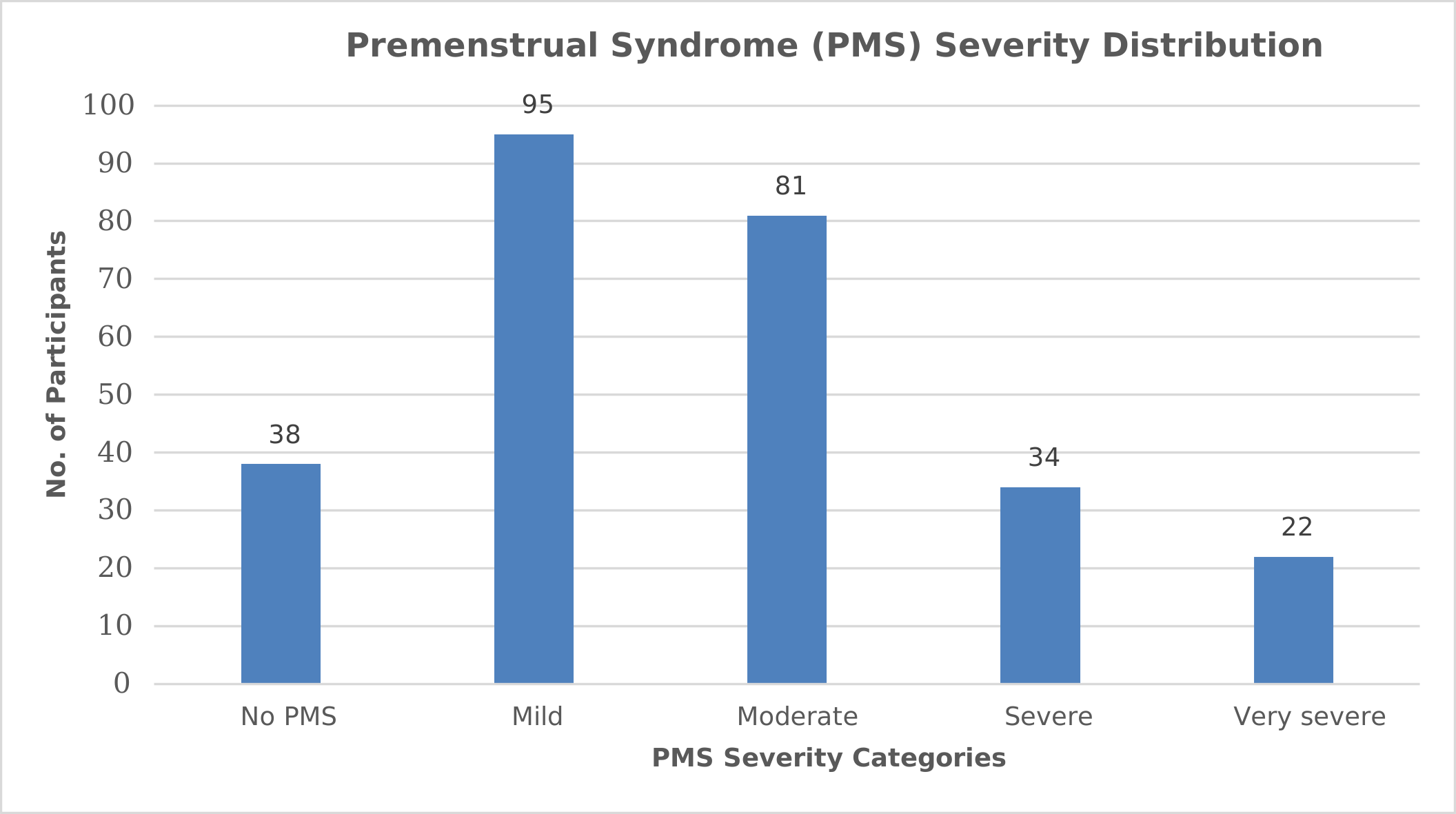
Figure 1. Distribution of PMS severity among adolescent girls in Bara Kahu, Islamabad.
Table 2 shows a statistically significant association between PMS severity and academic performance among symptomatic adolescent girls (p < 0.001). Academic performance deteriorated as PMS severity increased: compared with mild (17.9%) and moderate (22.2%) PMS, 51.6% of girls with mild PMS had good performance, whereas 17.9% of those with severe PMS had poor performance, while poor performance was highest among the severe PMS group (58.9%).
| Variables | Academic Performance | Chi-Square Value |
Degree of Freedom (df) |
p Value | |||
| Poor | Average | Good | |||||
| Frequency (%) | Frequency (%) | Frequency (%) | |||||
| PMS severity | Mild | 17 (17.9) | 29 (30.5) | 49 (51.6) | 34.565 | 4 | < 0.001 ** |
| Moderate | 18 (22.2) | 30 (37.0) | 33 (40.7) | ||||
| Severe | 33 (58.9) | 13 (23.2) | 10 (17.9) | ||||
| * Chi-square test of association. ** p < 0.05 was considered to indicate statistical significance. | |||||||
The data in Table 3 indicate a significant negative correlation between PMS severity and academic performance (ρ = -0.356, p < 0.01). Academic performance is also significantly negatively correlated with school absenteeism (ρ = -0.266, p < 0.01), indicating poorer performance with increasing absenteeism. Moreover, PMS severity was not significantly correlated with age (p = 0.204) or academic level (p = 0.197).
| Variables | Age (years) | Academic Level | School Absenteeism |
PMS Severity | Academic Performance |
| Age (years) | 1.00 | - | - | - | - |
| Academic level | 0.758 ** | 1.00 | - | - | - |
| School absenteeism | −0.094 | −0.115 | 1.00 | - | - |
| PMS severity | 0.077 | 0.079 | 0.086 | 1.00 | - |
| Academic performance | 0.069 | 0.090 | −0.266 ** | −0.356 ** | 1.00 |
| * Spearman’s rho (ρ) coefficients are presented. ** Correlations are significant at p < 0.01 (two-tailed). | |||||
4. Discussion
This study examined the association between PMS severity and academic performance among adolescent girls in the peri-urban setting of Islamabad and suggested that increasing the severity of premenstrual symptoms is associated with poor academic performance among symptomatic students. Moreover, academic performance was found to be related to school absenteeism, whereas PMS severity did not vary meaningfully with age or academic level in this population. These findings highlight the functional implications of menstrual health during adolescence and emphasize the importance of considering symptom severity when educational outcomes are being examined.
The results of this study, highlighting the high frequency of PMS among adolescent girls, are consistent with those of another Pakistani study, which reported that the prevalence of PMS in the country is 52% [16]. Other scientific literature from Pakistan also supports the same findings of the study and records higher percentages of PMS in the country [17,18]. Moreover, national studies also support the level of severity of the disease reported in the current study [19,20]. According to the national literature, this can be attributed to the lifestyle, low calcium and vitamin D intake and limited exposure to sunlight among Pakistani females; furthermore, working in high-stress environments can also be a contributing factor to the disease [21,22]. However, the level of awareness regarding PMS among Pakistani females was consistently high [23].
The results of the current study revealed an association between PMS severity and academic performance, which is supported by an Arabian study that highlighted that PMS symptoms negatively influence academic performance among adolescent girls, affecting mainly concentration in the classroom [24]. Another Arabian study conducted among college girls supports the findings of the current study that show that PMSs influence academic performance to a moderate degree [12]. A study conducted in the UAE highlighted the same increase in annual absenteeism among girls due to PMS symptoms [25]. This can be attributed to the fact that PMS influences academic functioning through cognitive and emotional difficulties, as well as the diet of adolescent girls, which impacts their PMS and academic performance [26,27,28].
With respect to age and academic level and PMS symptoms, the findings of the current study align with those of previous similar studies conducted in India [11,29]. However, importantly, an increase in age is linked to higher academic levels, resulting in greater concentration and more academic inputs, which may confound age and academic performance, separating the individual effects of age and educational level on PMS among adolescent girls. Similar findings have been reported by other studies, highlighting that adolescent girls may continue attending school with appropriate academic performance despite experiencing PMS symptoms, mainly because of academic pressure or sociocultural expectations of peers and society [30,31].
Despite these limitations, this study contributes valuable evidence by documenting the experiences of peri-urban Pakistani adolescents, a population that remains underrepresented in menstrual health research. In light of the observed associations between PMS severity and academic performance, the introduction of age-appropriate menstrual health education into school curricula may help improve symptom recognition and self-management among adolescent girls. Customized academic and psychosocial support systems for female students from lower socioeconomic strata may also reduce the combined effects of PMS and educational disadvantage. Furthermore, flexible, supportive school policies that acknowledge menstruation-related challenges among adolescent females may further promote academic engagement, whereas community-based awareness initiatives focused on nutrition, physical activity, and help-seeking behaviors may contribute to improved menstrual health and overall well-being among adolescent females.
5. Conclusions
The study revealed statistically significant associations between PMS severity and academic performance among adolescent girls in the peri-urban setting of Islamabad. Increased severity of premenstrual symptoms was associated with poor academic performance, highlighting the functional relevance of menstrual health during adolescence. Although these findings are based on cross-sectional data and do not imply causality, they suggest that attention to menstrual health and supportive educational environments may be important considerations in promoting academic engagement among adolescent girls.
Author contributions
Conceptualization, AI, MS, AY, and SAAN; methodology, AI, MS, AY, and SAAN; software, AI, and MS; validation, AI, and MS; formal analysis, AI, and MS; investigation, AI, AY and SAAN; resources, AI; data curation, MS, and SAAN; writing—original draft preparation, AI, AY, and SAAN; writing—review and editing, MS; visualization, AI; supervision, MS; project administration, AI, and MS. All authors have read and agreed to the published version of the manuscript.
Publication history
| Received | Revised | Accepted | Published |
| 30 July 2025 | 03 December 2025 | 20 December 2025 | 31 December 2025 |
Funding
This research received no specific grant from the public, commercial, or not-for-profit funding agencies.
Ethics statement and consent to participate
This study obtained ethical approval from the Institutional Review Board of Health Services Academy (No. 000443/HSA/MSPH-2022). Furthermore, permission for data collection was obtained from targeted school principals, and participants were completely informed about the study's purpose and were assured that voluntary participation and the right to withdraw at any time were clearly conveyed. Moreover, written parental/guardian consent and adolescent assent were obtained prior to the study.
Consent to publication
Not applicable.
Data availability
The data supporting this study's findings are available from the corresponding author, Alia Ibrahim, upon reasonable request.
Acknowledgements
The authors extend their sincere gratitude to the teachers and principals of the respective educational institutions for their invaluable support in facilitating data collection for this study.
Conflicts of interest
The authors declare no conflicts of interest.
Copyright
© 2025 The Author(s). This is an open access article distributed under the terms of the Creative Commons Attribution (CC BY) License. The use, distribution, or reproduction in other forums is permitted, provided the original author(s) and the copyright owner(s) are credited and that the original publication in this journal is cited, in accordance with accepted academic practice. No use, distribution or reproduction is permitted which does not comply with these terms.
Publisher's note
Logixs Journals remains neutral concerning jurisdictional claims in its published subject matter, including maps and institutional affiliations.
References
Omara EIM, Salama RAA, Tadross TM, Ahmed SK, Mohamed MG, Dewan SMR, et al. Impact of premenstrual tension syndrome on academic performance among female university students from the United Arab Emirates: a cross-sectional study. Health Sci Rep. 2024;7(10):e70124. https://doi.org/10.1002/hsr2.70124
Babapour F, Elyasi F, Shahhosseini Z, Hosseini Tabaghdehi M. The prevalence of moderate-severe premenstrual syndrome and premenstrual dysphoric disorder and the related factors in high school students: a cross-sectional study. Neuropsychopharmacol Rep. 2023;43(2):249-54. https://doi.org/10.1002/npr2.12338